Pencil It In, Forget It Forever: Britain’s Beautiful Lie of the Almost-Plan
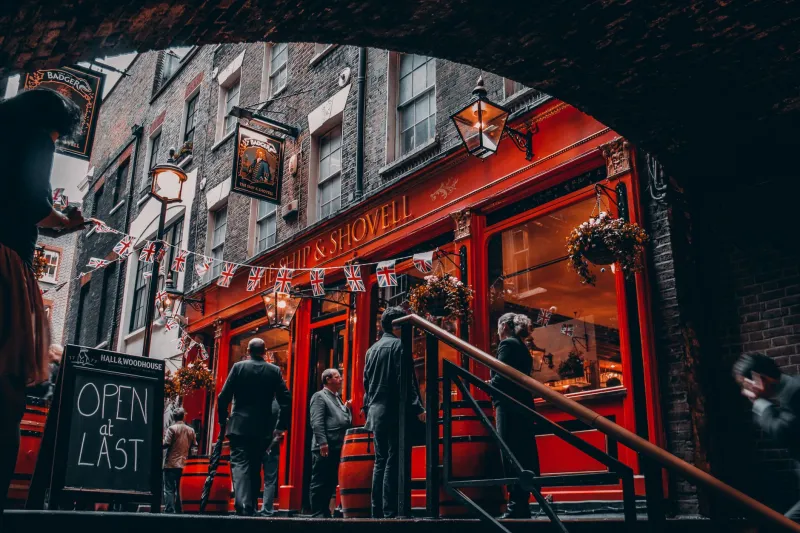
There is a sentence that does more social work than the NHS, the BBC and a stiff upper lip combined: ‘We must catch up soon.’ It is not a plan. It is a mood with punctuation. In Britain, the Maybe is not a failure of organisation; it is the organisation. It is the invisible infrastructure that keeps relationships warm without anyone having to put on shoes.
We tell ourselves we are busy. We are not busy. We are hedging. The diary is not a schedule; it is a museum of good intentions, curated by cowards. And the Maybe is the perfect exhibit: close enough to friendship to feel nice, far enough from a Tuesday evening to require nothing at all.
The hedge is the point
Other countries make plans and break them. Britain makes anti-plans and honours them religiously. The whole point of ‘let’s pencil something in’ is that the pencil is never sharpened. ‘I’ll send a poll’ is not a promise of logistics; it is a polite way of saying ‘I would like to want to see you.’ The Maybe spares everyone’s feelings and produces absolutely no dinners.
It is, in its own way, a love language. A low-effort, low-risk, low-calorie love language. Like a gym membership for your social life: you get the virtuous glow without the sweat.
A field guide to the almost-plan
1. The Warm Vague. ‘We must catch up soon.’ No date, no venue, no follow-up. It is the social equivalent of a hug through a window. Pleasant, brief, entirely non-committal.
2. The Poll That Dare Not Speak Its Name. ‘I’ll send a Doodle.’ The Doodle is never sent. If it is sent, half the group votes for dates they cannot do, one person asks what Doodle is, and the poll expires like a sad lettuce. It is not a scheduling tool; it is a group chat’s way of changing the subject.
3. The Calendar Placeholder. An invite appears: ‘Drinks — TBC.’ No time. No place. No chance. It exists so that everyone can feel they tried, while the actual evening remains a theoretical concept.
4. The Weather Clause. ‘Let’s do something outdoors if it’s nice.’ In Britain, this is a permanent postponement with meteorological cover. It is not a plan; it is a prayer.
5. The Group Chat Mirage. Someone suggests ‘everyone free Saturday?’ Forty-seven messages follow: who’s busy, who’s tired, who’s skint, a photo of a dog, and a debate about whether the pub with the good chips is too far. No table is booked. The dog has a better social life than you.
6. The Polite Counter-Offer. ‘Can’t do Thursday, but let’s find another time.’ No other time is proposed. It is a soft no wearing a maybe’s coat. You both know it. You both pretend.
7. The Seasonal Reboot. ‘We should do a Christmas thing.’ Discussed in November, mourned in January, resurrected the following November with the same enthusiasm and the same absence of a date. It is less a plan than a ritual.
8. The Plus-One Dodge. ‘We’ll have you over for dinner.’ No date, no address, no dinner. It is hospitality as poetry. Beautiful, moving, entirely fictional.
Why we do it
Because we are polite. Because we are conflict-averse. Because a direct ‘no’ feels like a small act of violence, and a direct ‘yes’ feels like a trap. The Maybe is the social equivalent of a soft Brexit: everyone agrees to something vague, and nobody has to own the consequences.
There is also the cost. A real plan requires logistics, money, a babysitter, a train ticket, the courage to leave the house. The Maybe requires none of that. It is cheap. It is safe. It is the reason your friendship group has a WhatsApp thread that reads like a war memorial.
And modern life has made it worse. We have more ways to message and fewer actual dinners. We collect people like bookmarks. We keep them open in tabs. We tell ourselves we’ll get round to them, as if friendship were a browser session and not a perishable good.
The cost of the permanent maybe
The irony is that the Maybe is meant to spare feelings, but it creates a low-grade hum of obligation that never discharges. It is admin for the soul. ‘Soon’ becomes meaningless. ‘Let’s’ becomes a verbal tic. Eventually, a genuine invitation feels almost aggressive. If someone says ‘Tuesday at 7.30, the pub by the station, I’ll book a table’, you panic. Specificity is suspicious. It is almost rude to be clear.
Meanwhile, the people we actually like drift into the archive. We are not lonely because we have no one; we are lonely because we have everyone, permanently pencilled in. The diary is full of maybes, and the evenings are full of nothing.
The mildly heretical suggestion
Try naming a day. Not ‘soon’. A day. ‘Thursday the 19th, 7pm, the pub by the station. I’ll book a table for four.’ See what happens. Some will say no. Some will ghost. One will say ‘can’t do Thursday, but let’s find another time’ and you will let them go with love. But someone will come. And the evening will be real, with chips and awkward small talk and a bill that needs splitting.
The Maybe is safe, but the actual plan is where friendship lives. So here is a rule: if it is not in the calendar within 48 hours, it is a compliment, not a commitment. Enjoy the compliment. Then book the table.
We can keep the warm words. We just need to attach them to a Tuesday. Britain’s social fabric will not unravel. It might even get a table for four.