Pulling Your Leg, Politely: In Defence of the British Smartarse
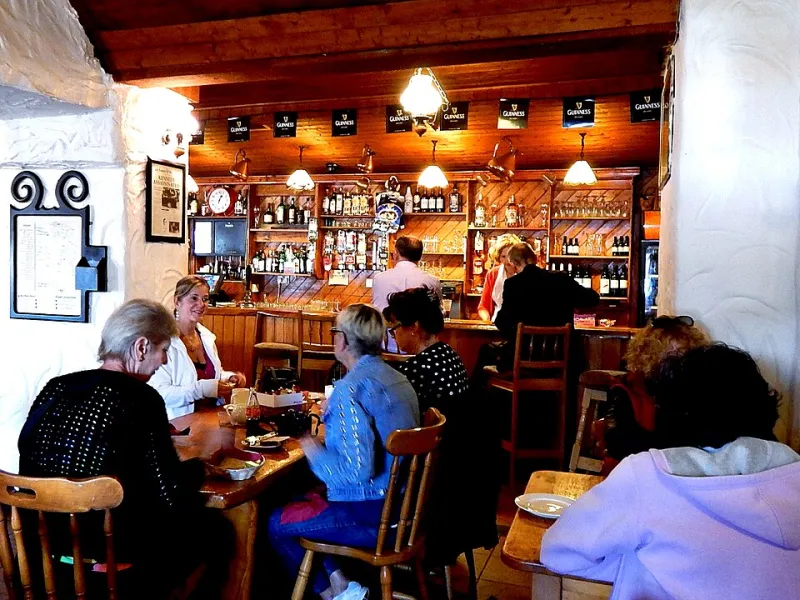
Photo: Suzanne Mischyshyn , CC BY-SA 2.0, via Wikimedia Commons
Britain has given the world many gifts. The NHS. The telegraph. The concept of queuing in an orderly fashion while quietly seething. But perhaps our greatest export is the smartarse: the person who can deflate a pompous politician, puncture a pretentious menu, and sum up a national crisis with a single raised eyebrow.
The smartarse is not the same as the troll. The troll wants to hurt. The smartarse wants to make you laugh, think, and possibly spill your tea. The smartarse is the person who, when told 'Cheer up, it might never happen', replies: 'It already has. I'm talking to you.'
And yet, somehow, the smartarse has acquired a bad reputation. We are told to be kind, to be positive, to 'live, laugh, love' our way through life. All worthy aims. But in the rush to be nice, we have forgotten the value of being witty. The smartarse is not a character flaw. He — or she, or they — is a civic art form.
A Proud Tradition of Clever Clogs
The British smartarse has a long and distinguished history. It runs from the music halls to the saloon bars, from the satire boom of the 1960s to the panel shows of the present day. It is there in the pub philosopher who can dismantle the Budget in one withering sentence. It is there in the radio comic who makes a politician squirm without ever raising his voice. It is there in the group chat, where a six-paragraph rant is met with a single gif of a nodding dog.
What makes the British smartarse distinctive is that he is rarely cruel. He punches up, not down. He includes himself in the joke. He knows that the best way to defuse an argument is to make everyone laugh, including the person he is arguing with. He is the social equivalent of a raised eyebrow: a small gesture that says more than a thousand angry posts.
The Pub, the Panel Show and the Group Chat
The smartarse thrives in three habitats. The first is the pub. Not the gastropub with the chalkboard menu and the £18 burger, but the proper pub: sticky carpet, questionable posters, a landlord who has seen it all. Here, the smartarse holds court. He can explain why the offside rule is a communist plot, why the local council is run by lizards, and why the only sensible response to a rainy Tuesday is another packet of pork scratchings. He is not always right. He is not always sober. But he is never boring.
The second habitat is the panel show. For decades, this has been the natural home of the British smartarse: a format in which comedians and journalists sit around a desk and make jokes about the week's news. The best guests are the ones who can make the host laugh and the politician squirm in equal measure. They are the ones who understand that a well-aimed quip is more devastating than a thousand-word op-ed.
The third habitat is the group chat. This is where the modern smartarse really comes into his own. The group chat is a laboratory of wit. It is where a friend can respond to a photo of a disastrous haircut with a single word: 'Brave.' It is where a family member can announce a new diet and receive a reply that is both supportive and quietly devastating. The group chat is the pub without the sticky carpet, and the smartarse is its unofficial poet laureate.
When Wit Goes Wrong: The Bore Versus the Wise Guy
But not everyone who thinks they are a smartarse actually is one. There is a fine line between the lovable wise guy and the online bore, and it is worth learning to tell the difference.
The lovable wise guy knows the room. He reads the mood. He stops when the joke lands wrong. He apologises if he has gone too far. He is self-deprecating. He is curious. He is, above all, kind.
The online bore does not know the room, because he is not in it. He is in a comment section at 2am, typing 'just asking questions' with the fury of a man who has never been asked a question in his life. He punches down. He repeats the same joke until it is worn out. He mistakes volume for wit. He confuses cruelty with candour. He thinks he is Oscar Wilde. Everyone else thinks he is a reply guy with a grudge.
A smartarse makes you laugh. A bore makes you check your phone. A smartarse leaves you feeling better about the world. A bore leaves you feeling like you need a shower. The distinction matters, because the bore gives the smartarse a bad name.
A Modest Manifesto for Better Backchat
So how do we reclaim the art of the smartarse? It starts with listening. The best quips come from paying attention. You cannot be witty if you are not curious. It helps to have a sense of timing. A joke that lands at the right moment is worth ten that land at the wrong one. It helps to be self-deprecating. The smartarse who can laugh at himself is never short of material.
Above all, it helps to remember that being a smartarse is not a licence to be a pillock. The point is not to win. The point is to connect. In an age of algorithmic rage and performative earnestness, the wise guy is a humanising force. He reminds us that we can disagree without declaring war. He reminds us that laughter is a social glue. He reminds us that the British tradition of taking the mickey is not a sign of decline, but a sign of life.
So next time someone asks you a daft question, do not reach for your phone. Reach for a quip. And if it fails, blame the room. That is what a smartarse would do.