Case File: The Kitchen at the End of the Corridor

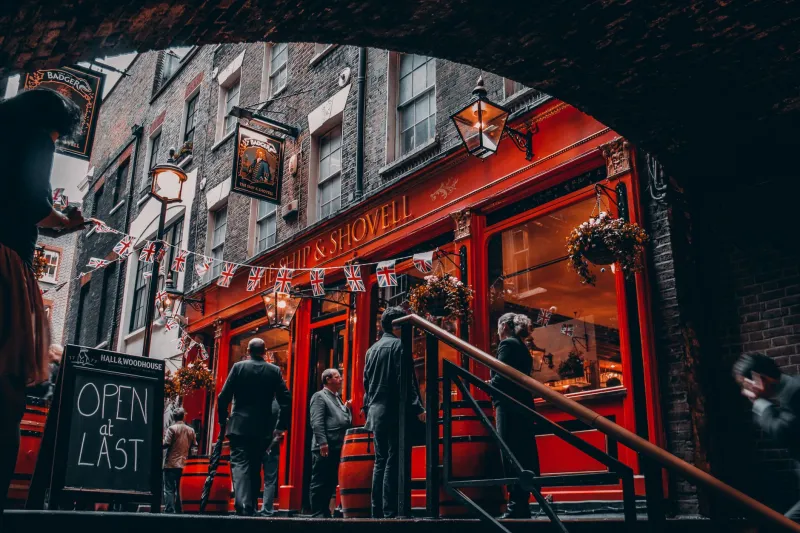
Photo by Photo by Sable Flow on Unsplash on Unsplash
At 8:47 on a Tuesday morning, the milk carton is empty. Not nearly empty. Not ‘a splash for one person’s tea’ empty. Empty-empty. Rinsed-out, lid-off, abandoned-on-the-counter empty. Somewhere in the building, a kettle clicks off and a person sighs the sigh of a nation that has been here before.
The office kitchen is not a room. It is a diplomatic incident with a toaster. It is a shared space in the way that a motorway service station is a shared space: technically true, emotionally lawless, and always smelling faintly of someone else’s lunch. And every morning, in offices across the country, a small crime is committed. Nobody saw anything. Everybody has a theory.
The Scene of the Crime
Let us examine the evidence. The counter has a laminated sign sellotaped to the wall: PLEASE WASH UP AFTER YOURSELF. The sign is curling at the corners. It has been there so long that it has become part of the décor, like a fire exit or a pot plant nobody waters. Beneath it, a mug sits in the sink with an inch of cold tea and the quiet confidence of a repeat offender.
The fridge hums. The fridge always hums. It is the only reliable witness in the building, and it is not talking. Inside: a bag of salad that has become a liquid, a jar of something with a date that predates the current management structure, and a Tupperware box with no name on it. The Tupperware is the office equivalent of an unmarked grave. You do not open it. You do not ask questions. You close the door and pretend you saw nothing.
Fridge Archaeology
There is a whole discipline waiting to be invented here. Fridge archaeology is the study of layers of food left by colleagues who believe, deep down, that the communal fridge is a kind of time capsule. The lower shelf is the Pleistocene era: ancient hummus, fossilised lemon, a single spring onion in a bag that has fogged up like a car window on a winter morning. The upper shelf is more recent history: yesterday’s sandwich, today’s optimism, tomorrow’s regret.
The golden rule of the office fridge is that nothing is truly yours once it goes in. You may have bought it. You may have written your name on it in permanent marker. You may have added a small drawing of a skull and crossbones, just to be clear. But the fridge is a collective hallucination. It belongs to everyone, which is another way of saying it belongs to no one, which is another way of saying it belongs to the person with the least shame and the most appetite.
The Milk Inquiry
The milk is the flashpoint. The milk is always the flashpoint. There are two schools of thought. The first is that milk is a personal item, purchased by a personal person, for personal tea. The second is that milk is a communal resource, like oxygen or Wi-Fi, and anyone who disagrees is being selfish. The two schools coexist in the same kitchen, at the same time, in a state of polite undeclared war.
Then comes the note. It appears on the fridge door, handwritten, usually in biro: ‘Whoever is using my milk — please stop. I know.’ The ‘I know’ is doing a lot of work. It implies surveillance. It implies a dossier. It implies that the author has narrowed it down to three suspects and is prepared to take this further, possibly to HR, possibly to the pages of a national newspaper.
Nobody ever admits it. The investigation stalls because the only way to catch the culprit would be to stake out the kitchen, and nobody wants to be the person who stakes out the kitchen. That is not a job. That is a personality.
The Microwave Fish Incident
Every office has a microwave fish story. It is a kind of folk tale, passed down from one generation of employees to the next. The details change — cod, mackerel, a suspiciously aromatic curry — but the plot is always the same: someone reheats something ambitious, the smell colonises the open-plan office, and a email goes round asking everyone to ‘be mindful of shared spaces.’
The email is a masterpiece of British passive aggression. It does not accuse. It does not name. It simply reminds. It uses the word ‘mindful’ three times and the word ‘respect’ twice, and everyone who reads it knows exactly what it means: the fish has been noted. The fish will not be forgotten.
Post-it Diplomacy
The Post-it note is the principal weapon of the office kitchen. It is cheap, deniable, and devastating. A note that says ‘Please clean the microwave after use’ is a note that says ‘You are an animal and I am watching you.’ A note that says ‘Please clean the microwave after use :)' is a note that says ‘You are an animal and I am watching you, but I am also smiling, which makes it worse.’
The smiley face is the most threatening punctuation mark in British office life. It is a tiny yellow mask of civility. It says: I am not angry. I am disappointed. And I have a pen.
The Biscuit Economy
Then there are the biscuits. The communal biscuit tin is a microcosm of the entire British social contract. It works on an honour system that nobody has ever agreed to and everybody quietly enforces. You take one. You do not take the last one without asking. If you do take the last one, you must replace the packet, or at least leave a note saying ‘Sorry — will restock tomorrow.’ The note is important. The note is the apology. The note is the receipt.
But there is always one person who takes the last biscuit and says nothing. We all know who they are. We have all sat opposite them in a meeting, watching them dunk a Hobnob with the serene confidence of someone who has never known guilt.
We Are All Suspects
The office kitchen is a mirror. It shows us who we are when we think nobody is looking, which is to say it shows us exactly who we are. It is a place of small kindnesses and smaller crimes. It is where the British genius for politeness meets the British genius for resentment, and they have a stand-up row in front of the kettle.
In the end, no one is prosecuted. The milk goes missing. The note goes up. The fridge hums. Tomorrow morning, someone will open the carton, find it empty, and sigh. And somewhere, in a meeting room down the corridor, a person will sip their tea and say nothing.
We are all suspects. The only question is whether you wash up your mug.