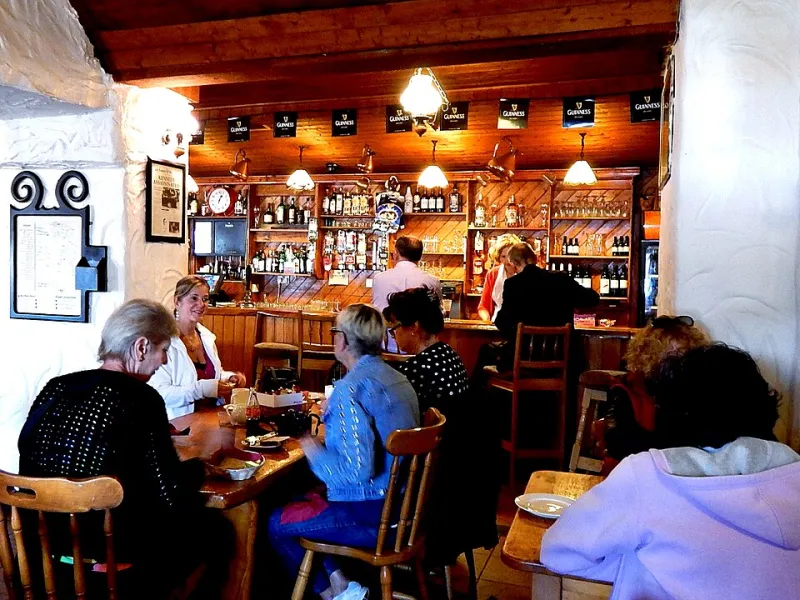
Phones Down, Morals Lower: Confessions from the Pub Quiz Back Booth

Photo: Hilary Murugu, CC BY-SA 4.0, via Wikimedia Commons
I have cheated at a pub quiz. Not dramatically, not with a hidden earpiece or a accomplice in the toilets, but in the small, grubby way that has become almost normal. The question was something about a capital city. I cannot remember which one. What I remember is the phone under the table, the thumb moving before the conscience could catch up, and the strange little thrill of knowing the answer without having earned it. The fact I recall the shame and not the question tells you something about the state of the British pub quiz in 2026.
How the pub quiz got serious
The pub quiz is often traced back to the 1970s, when landlords realised that a few rounds of general knowledge could keep people in the building on a Tuesday night. For decades it was gloriously amateur: a bloke with a clipboard, a broken microphone, a picture round printed slightly too small. The prize was a jug of beer or a voucher nobody remembered to redeem. The point was not the prize. The point was the ritual — the teams, the banter, the slow unraveling of the quizmaster's authority.
Then something shifted. The pub quiz became a performance. Teams arrived with names designed to get a laugh. Social media made the funny answer sheets shareable. The local quiz became a brand, a night out with a narrative arc. And once something becomes a performance, cheating stops feeling like a moral failure and starts feeling like part of the production.
The smartphone in the room
Smartphones made cheating frictionless. In the old days, a cheat required preparation: a book in a bag, a friend with a encyclopaedic memory, a whispered phone call from a pub corridor. Now the answer is always in your pocket, and it can be summoned with a thumb while maintaining eye contact with the quizmaster. AI has made it worse. You do not even need to know the answer; you need only know how to ask for it in a way that sounds like you are checking the football scores.
And group chats have turned the pub quiz into a distributed intelligence operation. One person at the table has a cousin who knows about films. Another has a work friend who can identify a flag. A third is in a WhatsApp group called something like 'Quiz Legends 2019' where someone has already posted the entire answer sheet from a different pub in a different town. The cheat is rarely a master criminal. The cheat is a social network with a pint in front of it.
Confessions from the back booth
Most of us have done the 'just checking' phone thing. You are not looking up the answer; you are checking the time. You are not Googling the question; you are replying to your mum. You are not using AI; you are using the calculator, which is different, obviously. The phone under the table is the pub quiz equivalent of the handball: everyone sees it, nobody wants to be the one who makes it a thing.
This is the low-stakes loophole. Because the quiz does not really matter, the cheating does not really count. Because the prize is a voucher or a round of drinks, the ethics are optional. Because everyone is doing it, nobody is doing it. And yet the table that wins by checking its phone knows. The quizmaster knows. The team that came second knows. The whole pub is participating in a small, collective fiction.
How to spot the table that is 'just checking'
- The Synchronised Huddle. Four heads dip towards a single point below table level, then rise with the satisfied smiles of people who have just discovered fire, or Wikipedia.
- The Sudden Expert. Someone who has not known a single capital city all night suddenly becomes fluent in the geography of a country they could not previously place on a map.
- The Phone Torch. A brief glow under a pint glass, quickly smothered by a hand. It is the pub quiz equivalent of a fox caught in headlights.
- The Overexplainer. After the answer is read out, one player launches into a detailed explanation of why they knew it all along. This is known as the alibi.
- The Group Chat Giggle. A player laughs at their phone, looks up, and says 'nothing' with the speed of a person who has definitely been sent the answer.
- The Convenient Toilet Break. A team member leaves at question seven and returns at question eight with a strange new confidence and a faint smell of hand soap.
Policing it without becoming the quiz police
There is a difference between gentle policing and a citizen's arrest. The first is a raised eyebrow; the second is a social incident. If you run a quiz, say the rules at the start. If you play in one, agree at the table that phones face down and nobody leaves during a round. The quizmaster can introduce a phone box — a real box, not a metaphorical one — where devices go during questions. It sounds draconian; it is actually liberating. The quiz becomes a quiz again, not a race to see who can unlock their phone fastest under a beer mat.
But be careful. The same smartphone that tempts you also holds the answer to 'who scored the winning goal in the 1966 World Cup final' and the name of the actor who played the landlord in a sitcom you have all seen but cannot quite remember. Banning phones entirely is a noble aim, but it is also a good way to turn a pub quiz into a pub argument.
Why we cheat
We cheat because the quiz has become a social performance, and winning is a form of currency. It is not really about knowledge. It is about belonging — to the team, to the joke, to the small theatre of being right in front of other people. The smartphone is just the easiest way to buy a ticket to that feeling. The real answer is to make the quiz less like an exam and more like a pub. Keep the questions silly. Keep the prize small. Keep your phone where I can see it. And if you must cheat, have the decency to look ashamed.