The Courgette Doctrine: Dispatches from Britain’s Tiniest, Pettiest Democracy
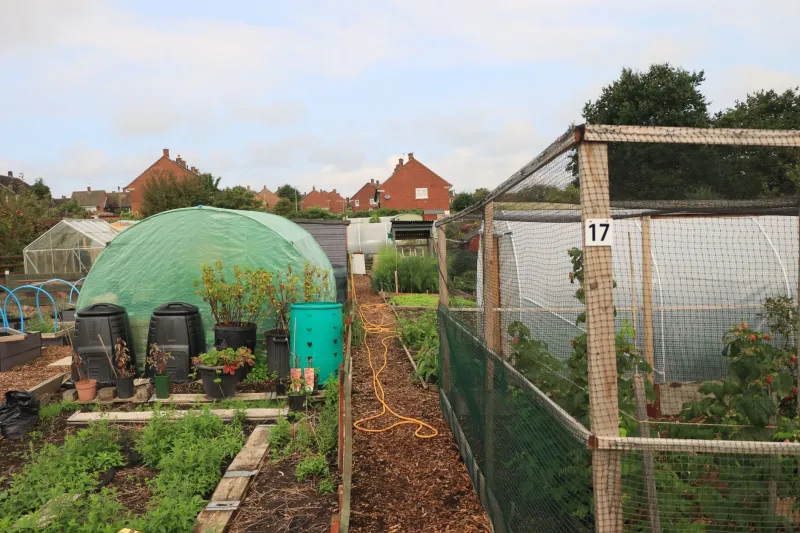
There are two systems of power in Britain. One involves Westminster, green benches and a speaker shouting for order. The other involves a tea urn, a padlocked shed and a man called Keith who insists the water butt rota is not a dictatorship. Only one of them reliably gets things done.
The allotment is Britain’s smallest and most honest democracy. It has elections, rules, factions, grudges, moments of astonishing generosity and a compost heap that knows where the bodies are buried. It is also the only place where a neighbour can hand you a carrier bag of courgettes and you understand, immediately, that you have been both thanked and threatened.
In 2026, with waiting lists longer than most festival queues and supermarket produce wrapped in more plastic than a junior minister’s promise, the allotment has become something stranger than a hobby. It is a tiny nation-state with a rent book. And like any nation-state, it runs on diplomacy, suspicion and the careful distribution of vegetables.
The Shed Is the Man
Nothing reveals character like a shed. A shed is never just a shed. It is a statement of intent, a foreign policy, a small wooden embassy for the self. One plot-holder has a tidy shed with a pitched felt roof, a solar light and a hand-painted sign reading ‘Potting Up’. Another has a structure that looks like a wardrobe that fell over in a storm, held together by hope and a bicycle lock. Both men will tell you the other has ideas above his station.
Shed envy is the allotment’s great unspoken current. It is not about square footage. It is about competence. The shed with shelves suggests a man who owns a spirit level. The shed with a kettle and a camping stove suggests a man who understands civilisation. The shed with a radio permanently tuned to Test Match Special suggests a man who has made peace with time itself.
And then there is the plot with no shed at all — just a bench, a flask and a look of moral superiority. That is not poverty. That is a flex.
Seed Swap Diplomacy
The annual seed swap is the allotment’s G7 summit. Everyone arrives with envelopes, old jam jars and a carefully calibrated air of generosity. Labels are written in biro. Some say ‘Tomato — good cropper’. Some say ‘Unknown beans, possibly climbing’. One says ‘Courgette — very reliable’. That last label is not a promise. It is a confession.
Seed-swap etiquette is delicate. You must accept what is offered, admire the handwriting and pretend you have not noticed that the donor is offloading enough courgette seed to invade a small country. You must also bring something to the table. Nothing is free in a seed swap. It is not a charity. It is a favour economy with horticultural branding.
There is a hierarchy. Heritage seeds carry more social weight than shop-bought packets. A person with ‘family beans from my grandfather’ has the quiet authority of a minor aristocrat. A person with ‘B&Q, two for one’ is treated kindly, like a new MP who has not yet learned where the tea is.
And someone always says, ‘I’ve got a glut coming.’ Everyone nods. Everyone knows the glut is not coming. The glut is already here. It is in a carrier bag by the gate with your name on it.
Notes from the Bindweed Front
Allotment politics has its own paperwork. A laminated note tied to a tap with garden twine can carry more menace than a writ. ‘To whoever is using my secateurs — please return them. I know who you are.’ That is not a request. That is a judicial review.
Bindweed is the insurgency that never surrenders. It arrives from next door, from under the fence, from the spirit world. The plot-holder who lets bindweed flower is not merely lazy. They are a threat to national security. The note will go up. The committee will be informed. The phrase ‘just a friendly reminder’ will be used in a way that suggests no friendship and very little reminding.
Yet this is what makes the allotment honest. In the outside world, people say ‘let’s catch up soon’ and mean ‘never’. On the allotment, people say ‘your raspberries are coming under my fence’ and mean exactly that. It is a place of plain speech, delivered through a sheet of A4 and a laminator.
The Annual Show: A Peace Treaty With Rosettes
Then comes the vegetable show, the allotment’s general election. Categories are announced weeks in advance. Longest bean. Heaviest onion. Best exhibit in a jam jar. Most unconvincing tomato. The air smells of compost, hairspray and barely suppressed ambition.
Gentle neighbours become ruthless growers. A pensioner who once helped you fix a gate will now refuse to reveal what he fed his leeks. A woman who shares her rhubarb with the whole site will guard a perfect marrow like it is the Crown Jewels. Judges arrive with clipboards and a look of divine detachment. Entries are inspected. Whispering occurs. Someone says, ‘That’s not a parsnip, that’s a lifestyle.’
And there, at the centre of it all, is the courgette. Too many to win a prize. Too many to eat. Too many to leave on the table without someone asking, ‘Are you trying to start something?’ The courgette is the allotment’s most potent diplomatic tool — a vegetable that says ‘I have too much and you have too little’ while simultaneously saying ‘please take this away from me before I turn into a fritter.’
The Peacekeeping Courgette
A glut of courgettes is both a gift and a threat. Leave a bag on a neighbour’s doorstep and you have performed a kindness with a whiff of siege. Accept the bag and you have agreed to a social contract. You will make soup. You will make cake. You will make a lasagne that nobody asked for. You will eventually pass some on, probably to someone you dislike, because that is how the cycle continues.
The allotment teaches a simple lesson: democracy is not just voting. It is listening to a man explain the correct way to store shallots. It is accepting a stray marrow with good grace. It is agreeing that the committee is useless while privately being grateful it exists. It is knowing that the rules matter, but the tea urn matters more.
Britain’s tiniest democracy is not really about vegetables. It is about belonging — to a patch of mud, a shed with a leak, a rota, a grudge, a small triumph at the annual show. And if someone hands you a courgette, take it. Refuse and you are no better than the bindweed.