The Sky Has Clocked Off: Britain’s Pretend-Afternoon Economy
At 4.12pm on a wet Tuesday in November, someone in a British office will glance at the window, see a sky the colour of a drained tea bag and say: ‘It’ll be dark soon.’ Soon? It is dark. It has been dark since the meeting about quarterly synergy began. But we do not say that. We are a nation that believes in scheduling, queues and the fiction of late afternoon.
The great British pretence
November is not a month in Britain so much as a group performance. The clocks go back, the sun clocks off, and we carry on as if the day has a second act. At 3.45pm we describe the weather as ‘brightening up’ when what we mean is ‘the streetlights have come on’. At 4.20pm we call it ‘early evening’ because ‘night’ sounds like we’ve failed at being productive. By 5pm we are in full denial, possibly with a mince pie.
This is the 4pm sunset tax: not a levy HMRC has thought to invoice yet, but a charge we pay in electricity, vitamin D tablets, overpriced desk lamps and the quiet sense that we have been ambushed by the sky.
Kettle anxiety and the lighting hierarchy
The first symptom is kettle anxiety. Somewhere between 2.50 and 3.10pm, the office kitchen becomes a place of silent panic. People who have not made a hot drink since 2019 suddenly need tea. The kettle boils; the window behind it is already showing the kind of darkness that usually requires a torch and a vague sense of danger.
Then comes the lighting hierarchy. The big light is switched on at 3.40pm and everyone pretends not to notice, as if a colleague has started crying at their desk. By 4pm, desk lamps are glowing, SAD lamps are humming, and the office looks like a small airport terminal in a Nordic crime drama. None of this is free. Every extra lamp, every hour of heating pulled forward, every ‘daylight’ bulb that is in fact a small beige lie — it all shows up on a bill somewhere.
The emotional invoice is itemised too. A lunchtime walk becomes a logistical operation. ‘I’ll go at three,’ you think, before remembering that three o’clock in November is basically dusk with a lunchbox. By the time you get your coat, the pavements are lit by shop windows and the sky has the nerve to look surprised.
The pub window as civic beacon
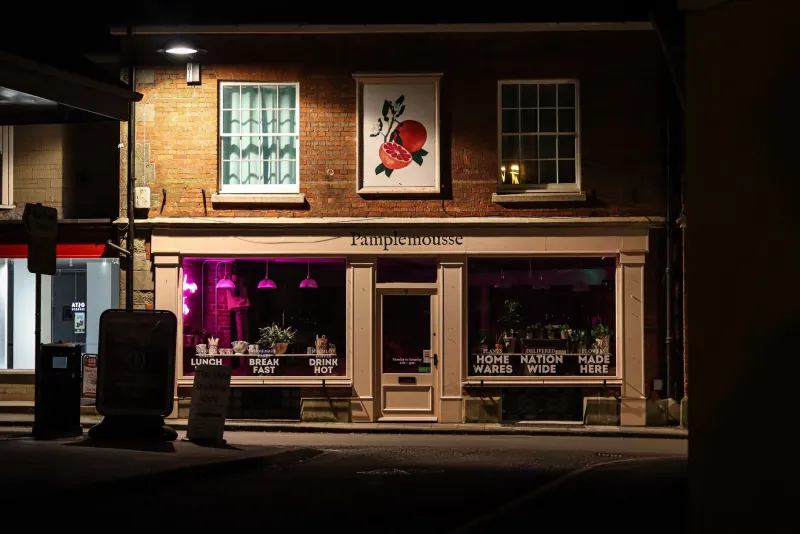
And then there is the pub. At 4.30pm, the pub window glows like a beacon of civilisation, which is exactly what it is. Inside, someone is having a glass of wine because it ‘feels like 9pm’. It does not feel like 9pm. It feels like 4.30pm with the lights off, but that is not a marketing slogan.
This is where the tax gets clever. Early darkness compresses the evening into one long, slightly disoriented run-up to bed. A drink at five feels earned. A second feels inevitable. By seven you are calculating whether dinner is a meal or a snack, and by nine you are asleep on the sofa with a documentary about ancient Rome muttering in the background.
Hospitality gets a boost, of course. Pubs, cafés and restaurants become glowing shelters from the dark. But there is a cost in the way we use time. The evening stops being a sequence and becomes a single blur. ‘I’ll do it tonight’ now means ‘I’ll do it in the dark, probably tomorrow, if the SAD lamp permits’.
The scheduling scam
November also exposes the lies we tell our calendars. ‘Late afternoon’ in a dentist’s reception means 4.15pm, when the sky is already night and the waiting room has the atmosphere of a delayed flight. ‘Before dark’ is a phrase used by delivery companies who have clearly never been to Britain in the winter. ‘I’ll pop round after work’ is a beautiful fantasy involving a car, a coat and a deep psychological commitment to the idea that the day is not over.
The real cost is not just financial. It is the low-level friction of living against the clock. We schedule walks we do not take. We plan errands we postpone because leaving the house at 4pm feels like going out at midnight. We eat tea at 5.30pm because our bodies have been fooled by the dark, then wonder why we are hungry again at 8pm and furious at 10pm.
There are practical measures, naturally. SAD lamps, vitamin D, daylight alarm clocks, the brave decision to go outside at lunchtime even when it is raining sideways. These are not frivolities; they are the British winter survival kit. But they are also expenses, and not everyone can afford to fight the dark with a £70 glowing rectangle.
Nightfall, with better manners
The solution is not to pretend November is June. The solution is to stop calling night ‘afternoon’. The sky has clocked off. We should have the decency to acknowledge it. Call it dark o’clock. Put the big light on without shame. Go to the pub at five with the honest intention of being home by seven. Walk at lunchtime, not at the exact moment the streetlights come on and the local foxes start holding meetings.
Britain does not need more daylight in November; it needs less lying about the time. The 4pm sunset tax will be collected either way, in bills and biscuits and slightly sad desk lamps. The least we can do is stop pretending it is still afternoon while the night presses its nose against the window.
After all, we are not a late-afternoon nation. We are a nation in denial, holding a cup of tea, watching the dark come in and saying, ‘It’s not too bad, actually.’ That may be the most British sentence of all.